How to use live classes and webinars in Customer Education
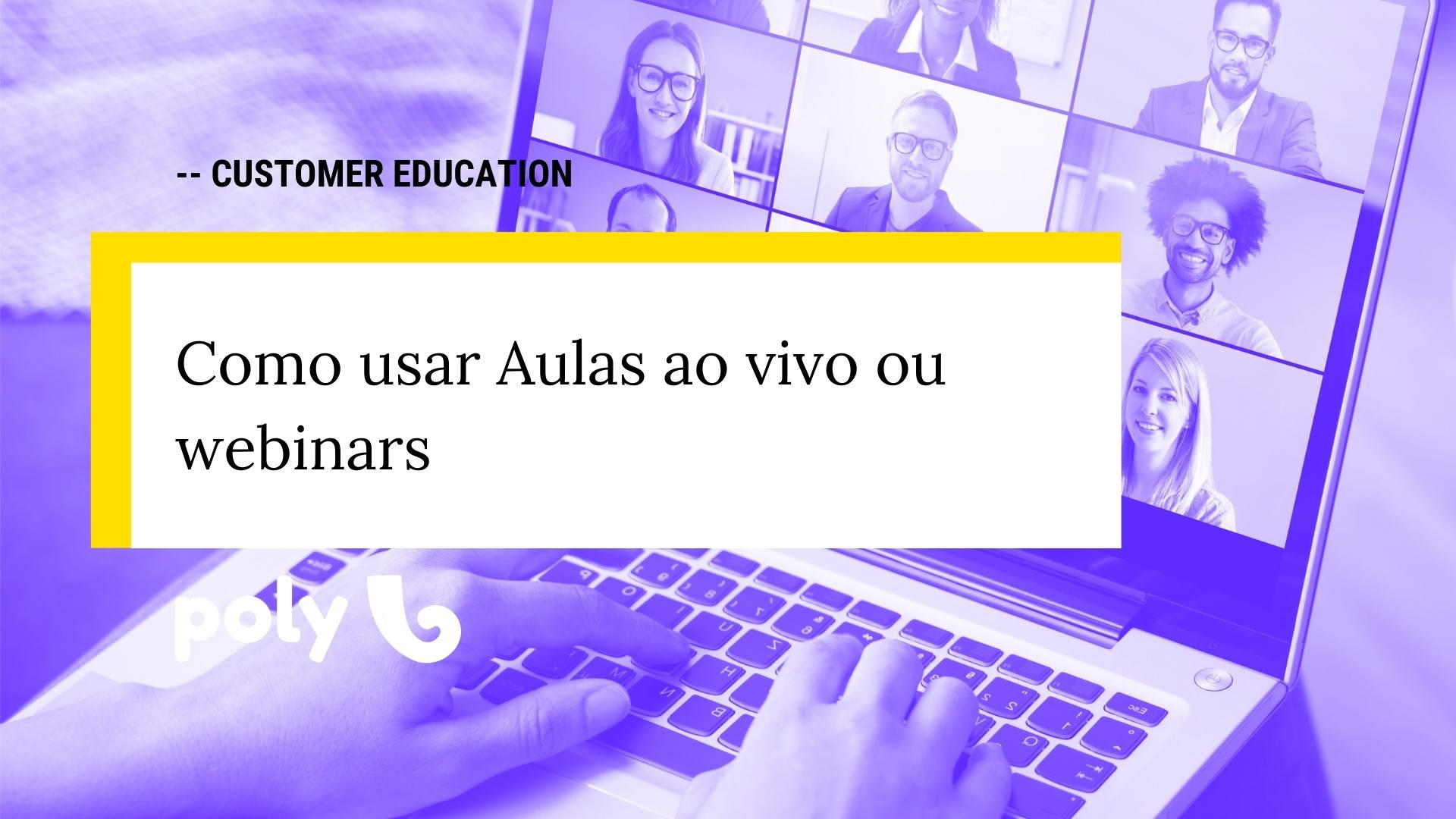
When you love a subject, nothing beats hearing an expert talk about it. Different viewpoints, and the chance to go deep with someone who knows the topic, give you a much broader perspective. That's why live classes and webinars exploded when we all stayed home during the pandemic. The webinar market was forecast to reach 800 million dollars by 2023. It keeps growing, and if your company hasn't joined the wave yet, now is the time! In today's article, we'll explain in detail what webinars are and the different types, and help you fit them into your Customer Education strategy. Want to know how to run a great webinar with a schedule that doesn't wear people out? This article is for you!
What are webinars and what types are there?
Live classes and webinars are great ways to reach your customers differently. They can cover topics that are trending right now and, unlike closed courses, they're more dynamic because they happen live. That means more interaction with the audience, with room for questions and live engagement. Webinar is a shorter way of saying web-based seminar, meaning a seminar held over the internet. Its goal is to present an issue and teach about it. It works like an in-person talk, with the difference that anyone with the link and an internet connection can access it. The possibilities for webinars are endless precisely because you can reach people regardless of where they are. Learn how to improve customer retention and renewal for your startup's users by learning what the product adoption curve is.
1. Authority webinars
This type of webinar is also known as a Thought Leadership Webinar. It aims to position your company as an authority on the subject. The idea is to bring together experts or other influential people on the topic, so viewers see how this subject is understood. They're a great way to present new ideas or show how your company keeps up with market changes and innovates. Bringing in influential people is also a strategy, since the people who follow them can become leads for your company. You can organize a talk or a panel. The idea is to center the expert while bringing the audience into the subject. The difference between a good webinar and a poorly organized one is not alienating people, meaning the audience should leave feeling better, not worse.
2. Lead nurturing webinars
This webinar is designed so prospects can see the value in your company and what it offers, and become customers. The content focuses on explaining each product, covering benefits and presenting solutions. This webinar can be a set of success stories or a tutorial for your product. Think about what you believe will add the most value to your product, and make that the theme of your lead nurturing webinar.
3. Customer onboarding webinars
This webinar presents the product in detail. It's the crucial moment for setting the tone of your relationship with the customer. Present the product well and make sure they clearly understand the benefits. A webinar for onboarding works well because you can explain things to many people at once, and the Q&A helps: one person's question is often many people's question. Bring your new customers to the table to show them the product and how to get value from it quickly, to build a community and, of course, even to combine it with a bit of lead nurturing, joining the two goals.
4. On-demand webinars
On-demand webinars are a bit outside the scope of this article, which focuses on live classes. Still, it's good to know the option exists. This format can be the recording of your other live webinars, available to people who couldn't attend. It also means your company doesn't need to run a webinar on the same subject every month. Here the focus is more on answering specific questions, and it's usually reserved for customers on higher-tier plans. See the main Customer Education tools here. These are just 4 of the most commonly used webinar formats. If your company has an idea for a webinar you think customers or prospects need, even if it isn't on the list, explore it. The webinar universe is huge and the formats vary a lot. Want to host a conversation with customers who succeeded with your product? Or present an update? Or use a webinar just to demo the solution live? All of these fit the webinar format and will find an audience if done right.
How webinars fit into a Customer Education strategy
As we saw, webinars are great for reaching a large number of people, which also makes them great for reaching a different audience. The average webinar conversion rate is 55%. That makes them a very powerful tool for your company. Looking at the formats, some already show a lot of potential within Customer Education. Onboarding-focused webinars, for example, are the clearest case of using live classes to educate the customers of your products. Having an expert explain the product's features and show in detail how to reach the different options makes learning to use it much easier. Another way to use webinars in your Customer Education strategy is to run live Q&A sessions. Everyone with doubts can participate and also learn from the other questions. These sessions can be tied to other content or created just for this purpose.
What are the secrets to a successful webinar?
To run a successful webinar you need to think about why you're running one. Doing one just to "do one" isn't enough, and it probably won't bring the return you want. Creating a webinar requires planning and understanding the reason behind it. Do you want to grow your lead list? Help customers with a new feature? Start by defining the goal of your webinar so you can measure whether you really achieved it. A successful webinar is one that achieves what it set out to do. Say your goal is for 20% of attendees to become customers. Which webinar would be more successful: webinar A, with more than 100 attendees but only 5 purchases, or webinar B, with 20 attendees and 10 purchases? Webinar B was clearly the conversion success. Now imagine the same scenario, but your goal was to reach as many people as possible. In that case, webinar A was the more successful one.
Defining the success of your webinar
For your webinar to reach its goal and succeed, think about a format that grabs attention. Keeping your target audience in mind, and how to help them identify with the content, is a great start. Invite authorities on the subject, look for current topics, write interesting promotions. All of this helps attract viewers. Another thing to consider is planning when to hold your webinars. I'll cover this in the next section with a well-defined calendar. But keep this in mind: don't run webinars constantly. It gets tiring, and attendance will probably drop by the second one in a row. Webinars that people leave thinking were very good are the ones that open for live questions. That interaction is a way to connect and clear up specific doubts that may not have been clear, so set aside time in your presentation for it. One tip to get all interested people to attend is to build an email list and remind them of the date. It may seem like a minor detail, but people are usually very busy and, even if they want to see your webinar, they forget to add it to their calendar. Sending periodic reminders is a great way to keep interest up.
How to build a webinar calendar
As I said before, running many webinars in a row can make people lose interest and skip them, especially if the topics are very similar. So invest some time in building a webinar calendar. To create this calendar, first think about all the topics you want to cover. Which webinars would you like to run over the next few months? With them written down, check whether they're too repetitive and whether each topic fits in a single session or needs two days. Webinars usually last 30 to 60 minutes, so don't stretch them too long. With a general idea of the topics, think about your own availability to deliver them all. Will you present them all, or will you invite other people? Keep your schedule in mind: running webinars takes time, not only during the live session but also in advance, preparing the content. So try to space them out according to how long it takes to prepare each piece of content, so you're well prepared. Also choose dates based on your social media metrics. What time is best for your followers? Plan the date well in advance, and avoid commemorative dates, holidays and weekends. Times matter too. During business hours you'll rarely have many people online, unless you want to reach an audience that doesn't work during those hours. It all depends on your target audience and on the goal of the webinar. That's why, once again, it's essential to know who will attend and to have a very clear goal. Webinars and live classes are very powerful tools for your company, but you need to know how to use them and how to take advantage of what they offer.